At UNGA, five minutes is rarely just five minutes. A principal leaves one meeting late, the next bilateral is already waiting, and the vehicle plan no longer matches the calendar. What looks like a transportation delay can quickly become a protocol problem.
That is why UNGA 81 diplomatic schedule travel should be built around the diplomatic agenda, not treated as a series of isolated rides. The 81st session opens on September 8, 2026, while the General Debate is scheduled for September 22–26 and September 28. High-level meetings are also scheduled across September 23, 24, 25, 28, and 29, creating an especially concentrated period of diplomatic activity.
For protocol officers, chiefs of staff, mission coordinators, and delegation leads, the central question is simple: when the day changes, can the ground plan change without disrupting the diplomatic sequence?
Protocol is the Schedule Behind the Schedule
The public calendar shows speeches, bilaterals, receptions, and side events. The protocol calendar adds another layer: credentials, access, principal readiness, delegation movement, arrival order, and the time required to transition between official settings.
That makes UNGA 81 Protocol Officer logistics much broader than vehicle coordination.
A strong UNGA 81 diplomatic schedule travel plan therefore starts with the consequences of each movement. A delayed reception is not the same as a delayed head-of-delegation bilateral. A flexible working lunch is not the same as a fixed speaking commitment.
The protocol officer’s job is to know which minutes can move and which cannot.
Three Clocks, One Diplomatic Day
During High-Level Week, one timetable is never enough.
The Principal Clock
Is the principal ready? Has the previous meeting ended? Are aides, interpreters, security personnel, and accompanying officials positioned to move?
The Meeting Clock
What time must the delegation actually be inside the room, not merely outside the building? Which engagement has a hard start, and which offers some flexibility?
The Vehicle Clock
Where is the vehicle? What does the chauffeur need to know? Can the next movement still support the revised schedule?
UNGA 81 diplomatic schedule travel works when these three clocks are managed together. When one slips, the team should already understand what can absorb the delay.
Classify the Day Before it Starts
A diplomatic schedule is easier to protect when every engagement is categorized before the delegation leaves the hotel.
Fixed: General debate participation, formal bilaterals, credentialed high-level events, and tightly scheduled official calls.
Adjustable: Some side events, working lunches, informal consultations, receptions, and internal delegation meetings.
Delegable: Meetings or tasks another official can cover if the principal’s schedule compresses.
This is the practical core of UNGA 81 delegation schedule travel. The protocol officer should not be deciding from scratch which engagement matters most while the delegation is already moving.
For UNGA 81 diplomatic schedule travel, the ground team should receive the same hierarchy. If the 2:00 p.m. bilateral is fixed and the 1:15 p.m. stop is flexible, the movement plan should reflect that before a delay occurs.
That is the working logic of UNGA 81 diplomatic schedule travel: protect the diplomatic priority first, then adjust everything around it.
Bilateral Meetings Need More Than an Address
A 30-minute bilateral can require far more than 30 minutes of movement.
UNGA 81 bilateral meeting travel may need time for access, greeting, staff positioning, interpretation support, internal briefing, photographs, or a short exchange with advisors before the delegation moves again.
The transportation coordinator therefore needs more than a venue name. Share the confirmed location, required arrival window, authorized contact, passenger list, and what follows next.
A well-built UNGA 81 diplomatic schedule travel plan protects the space around the meeting, not just the meeting itself.
High-Level Week Works Like a Chain Reaction
The General Debate runs from September 22 through 26 and again on September 28. Mandated high-level meetings are also scheduled during the same period, including meetings on the right to development, sea-level rise, pandemic preparedness and response, and the Durban Declaration and Programme of Action.
That density is why UNGA 81 High Level Week logistics should be treated as one connected program rather than a collection of bookings.
Think of the day as:
Hotel readiness → Official engagement → UN Headquarters → Bilateral → Working meeting → Reception → Final return
If one link changes, every later movement deserves another look.
This is where UNGA 81 diplomatic schedule travel differs from routine executive travel. The question is not simply, “Can the vehicle get there?” It is, “Can the delegation still preserve the order and purpose of the day?”
Run a Protocol Pressure Test
Before the principal moves, pressure-test the schedule:
- What cannot move? Protect engagements with formal, political, or protocol consequences.
- What can compress? Identify meetings or stops that can realistically be shortened.
- Who needs to know first? Establish the notification order for the mission, host, security team, interpreter, and transportation coordinator.
- What is the recovery move? Decide whether the answer is a reroute, vehicle repositioning, smaller travel party, skipped stop, or revised sequence.
This makes UNGA 81 Protocol Officer logistics proactive. The aim is not to predict every disruption. It is to avoid inventing the response while everyone is already under pressure.
One Principal, One Confirmed Version of the Day
During UNGA, the “latest schedule” can exist in several places at once: the principal’s calendar, the protocol officer’s run sheet, mission messages, security notes, and transportation dispatch.
That creates one very simple risk: different teams begin acting on different information.
For UNGA 81 diplomatic schedule travel, designate one source of truth for confirmed movements. Changes should pass through one authorized coordinator before reaching the chauffeur team.
A resilient UNGA 81 diplomatic schedule travel plan depends as much on information discipline as it does on the vehicle itself.
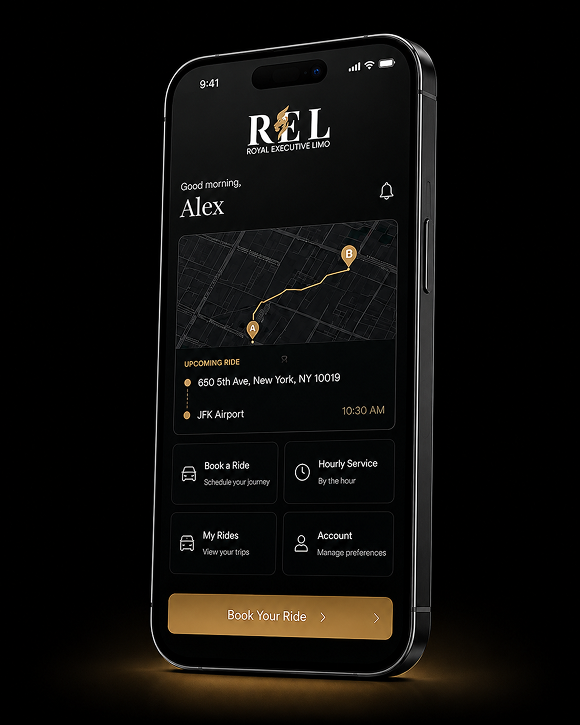
REL’s corporate travel service supports hotel and venue transfers, multi-stop schedules, full-day delegation movement, dispatch oversight, and real-time adjustments. REL also states that its VIP and diplomatic transport uses protocol-trained chauffeurs and unbranded vehicles for confidentiality.
That makes executive ground transportation most useful when it sits inside the delegation’s coordination structure rather than operating as a separate layer.
Use the Vehicle as a Controlled Transition Space
The ride between engagements may be one of the few periods when the principal is not publicly visible.
It can become time for a bilateral briefing, a call with the mission, document review, or simply a quiet reset before the next room.
REL’s corporate service supports quiet, connected cabin space and offers sedans, SUVs, and Sprinters for individuals, executive teams, and delegations.
For a diplomatic program, executive car service for business travel is therefore not only about comfort. It can support continuity between engagements when privacy and concentration matter.
A corporate car service can also keep the vehicle plan consistent across a multi-stop day instead of turning every transfer into a fresh arrangement.
When the Schedule Slips, Protect the Objective
Imagine this:
The principal leaves a meeting 18 minutes late. The next bilateral is fixed. A reception later that evening is flexible.
The wrong response is to spread those 18 minutes across every remaining stop.
The better response is to protect the bilateral, notify the relevant parties, compress or revise the flexible engagement, and update transportation around the new sequence.
That is what UNGA 81 diplomatic schedule travel should enable: not perfect punctuality at all costs, but intelligent recovery when the agenda changes.
The protocol officer is not trying to save every minute. The protocol officer is protecting the purpose of the day.
Keep Security and Traffic as Variables, Not the Theme
High-Level Week involves extensive access management and logistical coordination around UN Headquarters, but those issues should sit inside a wider United Nations General Assembly 81 travel plan rather than define it. The UN publishes dedicated information for delegations covering arrangements for the high-level meetings and General Debate.
The next destination, protocol priority, delegation composition, and required arrival time should remain clear even if conditions on the ground change.
That is another reason UNGA 81 diplomatic schedule travel needs margin. The transportation team can adapt only when the schedule gives it room to do so.
Build REL into the Run of Show
For UNGA 81 delegation schedule travel, transportation should appear in the same operational document as meetings, principals, contacts, passenger manifests, and movement windows.
REL’s corporate services include run-of-show planning, manifest intake, hotel and venue transfers, group logistics, dispatch support, hourly or full-day scheduling, and multi-day engagements.
That makes executive ground transportation a practical fit for structured delegation movement. A corporate car service can support an individual principal or smaller team, while SUVs or Sprinters may suit larger groups. REL offers sedans, SUVs, Mercedes Sprinters, Jet Sprinters, and minivans among its corporate fleet options.
The important point is not the vehicle category alone. It is whether UNGA 81 diplomatic schedule travel has been designed as one coordinated program.
The Best Protocol Outcome is Uneventful
Protocol work is often most successful when nobody notices it.
The principal reaches the correct entrance. The bilateral begins in the right order. The chauffeur has the updated destination. The host never sees the schedule correction that happened 20 minutes earlier.
That is the standard UNGA 81 diplomatic schedule travel should aim for.
The UN Protocol and Liaison Service emphasizes orderly diplomatic procedures, protocol guidance, official visits, and high-level coordination. REL’s role is different but complementary: supporting the ground movement with planned, discreet, adaptable transportation.
When the agenda is dense, executive car service for business travel, executive ground transportation, and a coordinated corporate car service can help keep movement aligned with the diplomatic program.
Plan UNGA 81 diplomatic schedule travel with REL and give the protocol team room to manage the agenda, not the ride.
Frequently Asked Questions
What should be included in UNGA 81 Protocol Officer logistics?
UNGA 81 Protocol Officer logistics should account for the principal’s schedule, delegation composition, credentials and access requirements, confirmed contacts, meeting priorities, transportation windows, and contingency decisions. The UN Protocol and Liaison Service also handles delegation registration and provides protocol guidance to missions.
When is the UNGA 81 General Debate?
The 81st session opens on September 8, 2026, and the General Debate is scheduled for September 22–26 and September 28. These dates are central to United Nations General Assembly 81 travel planning.
How should UNGA 81 bilateral meeting travel be planned?
UNGA 81 bilateral meeting travel should work backward from the time the delegation must be inside and ready, not simply from the meeting start. Include access, briefing, staff movement, the meeting itself, and the next engagement.
Can REL support UNGA 81 delegation schedule travel across a full day?
REL states that its corporate services support hotel and venue transfers, multi-stop and full-day scheduling, group logistics, delegation movement, dispatch oversight, and real-time adjustments. That makes it relevant for UNGA 81 delegation schedule travel when the itinerary is supplied and coordinated in advance.
What type of transportation fits UNGA 81 High Level Week logistics?
The vehicle plan depends on delegation size, privacy needs, and schedule structure. REL offers sedans, SUVs, and Sprinters for executive teams and delegations. For UNGA 81 High Level Week logistics, the vehicle should support the delegation structure rather than determine it.