Corporate car service gives executives, assistants, and client-facing teams one continuous travel plan when the business day extends beyond a single city. The route may include a headquarters, client office, project site, hotel, airport, and working dinner—each with its own timing and passenger needs.
What makes the day demanding is not distance alone. The traveler may need to prepare between meetings, colleagues may join halfway through, and the final destination may depend on how the last conversation unfolds. A connected journey keeps those transitions from becoming separate problems.
One Business Day Can Cover an Entire Region
Modern business districts do not end at city limits. Companies work across neighboring commercial centers, suburban offices, financial districts, industrial sites, and airport corridors. A schedule that looks manageable on paper can become fragmented once parking, changing traffic, unfamiliar entrances, and several pickups enter the picture.
Driving personally places those decisions on someone who may also be leading the meeting. Booking a different ride after every appointment introduces new waiting times and handoffs. Corporate car service offers another approach: organize the route around the working day instead of arranging each leg after the previous one ends.
That distinction becomes clearer when the itinerary is viewed in motion.
A Corporate Car Service Day in Five Moves
Consider a regional schedule that begins at a hotel, crosses into another city for a client meeting, continues to a project site, and ends with dinner near the following morning’s appointment. It is one business day, but each stage asks something different from the transportation.
7:30 AM: The Day Begins Before the First Meeting
The executive leaves the hotel with presentation materials, a laptop, and a schedule already full of decisions. This first journey is preparation time, not simply a commute.
A corporate car service allows the passenger to review the morning’s priorities without also watching directions or searching for parking. For an executive assistant, it establishes the day’s first confirmed movement and provides a clear starting point for later updates.
10:15 AM: The First Meeting Changes the Next One
The meeting finishes fifteen minutes late. A follow-up call has been added, and a colleague who was expected to travel separately now needs to join the next leg.
With unrelated bookings, that change can trigger a new search for transportation. With a corporate car service, the coordinator can communicate the revised passenger arrangement while keeping the wider itinerary visible.
The value of corporate transportation appears in moments like this. The schedule does not have to be rebuilt simply because the day did not follow its first draft exactly.
12:00 PM: The City Changes, but the Work Continues
The next appointment sits across a city line. During the journey, the team may compare notes from the morning, adjust the presentation, or simply take a quiet break before meeting a different audience.
A consistent vehicle reduces the repeated gathering, unloading, and repacking that comes with several separate rides. A professional executive car service also gives the principal a composed setting between two very different rooms.
The journey remains part of the workday without demanding the traveler’s constant attention.
3:30 PM: The Passenger Group Splits
After the site visit, two colleagues return to their office while the principal continues to another meeting. Keeping the day connected does not require everyone to stay together.
A corporate car service itinerary can identify where the group divides and whether another vehicle is needed. One route may continue with the executive while a second supports the departing team. Presentation cases, luggage, and shared materials can also be assigned before anyone reaches the curb.
This is especially useful for deal teams, consultants, legal professionals, and company leaders whose schedules overlap for only part of the day.
6:30 PM: Dinner Is Still Part of the Business Day
The final meeting leads into a client dinner. Some travelers will return home afterward, while the visiting executive will stay near the next morning’s appointment.
The end of the evening should already have a direction. A confirmed return, hotel transfer, or separate departure plan prevents the last conversation from ending with everyone deciding how to leave.
Good business travel recognizes that the day continues until each traveler reaches the right final destination.
What Should Stay Consistent While the Route Changes?
Addresses and passengers may change, but a few elements should remain clear throughout the day.
- One working itinerary: The coordinator should be able to see the confirmed sequence rather than reconstruct it from separate reservations.
- One reliable trip contact: Important timing or passenger changes should come through an agreed person.
- Clear passenger assignments: Everyone should know which vehicle they are using when the group divides.
- Room for the busiest leg: Vehicle planning should reflect the highest passenger count and everything traveling with the group.
- A confirmed ending: The hotel, airport, residence, or final business destination should be settled before the day becomes tiring.
These points allow a corporate car service to support a changing schedule without making the passenger responsible for every operational detail.
Choose the Booking Style That Matches the Day
The same service structure will not suit every cross-city itinerary.
Direct transfers work well when the pickup and destination are fixed, the departure time is reliable, and the vehicle does not need to remain available.
An hourly car service may be more suitable when the day includes several stops, meeting lengths may change, or the traveler wants the same vehicle available during the reserved period.
Multiple vehicles may make sense when senior leaders, colleagues, clients, or assistants share only part of the route and need to leave at different times.
The best corporate car service arrangement depends on the shape of the day. A schedule with two firm transfers should not be treated like a fluid eight-hour itinerary, while a moving executive team should not be forced into a series of isolated pickups.
The Passenger Is Not Always the Person Booking
Executive assistants, office managers, travel coordinators, chiefs of staff, and client-service teams often arrange transportation for someone else. They need different information from the person sitting in the vehicle.
The traveler needs a clear pickup location, chauffeur details, and an easy way to make contact. For the person arranging the day, the bigger picture matters: who is traveling, where the route changes, and what needs to happen next.
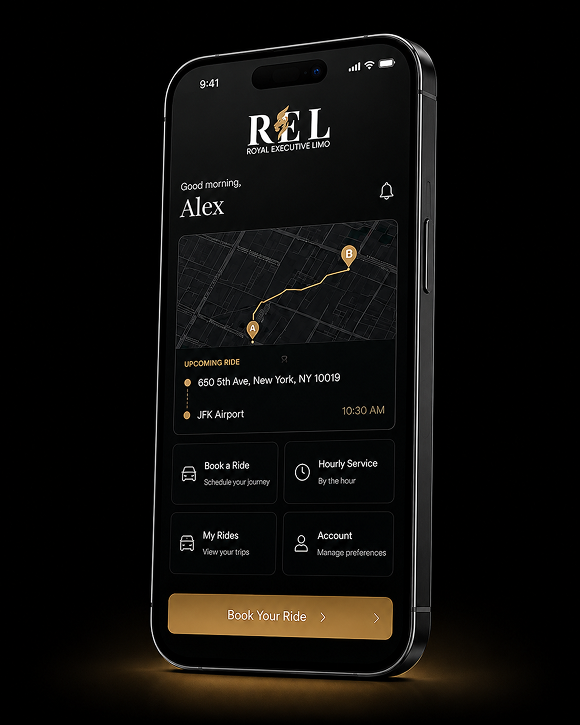
REL’s corporate car service can be arranged around both perspectives. Through the REL App, travelers and coordinators can review upcoming reservations, track the chauffeur, and make contact when needed. The principal receives the details relevant to the journey without having to manage the entire day.
When Clients and Partners Join the Route
A regional itinerary may include visitors who do not know the area or the company’s offices. Asking them to arrange each transfer can make a carefully hosted day feel disconnected.
A business car service can link the guest’s hotel, meetings, meals, and return while allowing company representatives to join for selected portions. If an investor, candidate, board member, or client is traveling between several offices, the transportation becomes part of the welcome.
A professional chauffeur service supports that hospitality quietly. The guest experiences clear pickups and a consistent standard, while the meetings remain the focus.
The same principle applies when several executives are being hosted. A corporate transportation service can coordinate separate passenger movements without asking everyone to follow one route or timetable.
Where the Airport Fits Into the Day
Some cross-city itineraries begin or end with a flight. The visitor may land and continue directly to a meeting, or finish the working day with an airport departure.
Connecting airport transfers to the business itinerary helps the arrival or departure fit the rest of the schedule. Flight information, luggage, terminal procedures, the first appointment, and the onward drive can be considered together.
When a same-day meeting follows the flight, the corporate car service schedule should leave room for baggage and pickup procedures. When the traveler lands the evening before, the airport transfer and next morning’s hotel departure can remain separate reservations within the wider visit.
End the Day Where Tomorrow Begins
Returning to the original city is not always the most useful conclusion. If the next morning begins near the final meeting, a hotel stay may create a calmer and more efficient itinerary. If the traveler must return, that movement should be considered before fatigue and changing plans take over.
The corporate car service plan should identify who is returning, who is staying, where shared materials belong, and whether the final destination has changed. This is particularly important when colleagues leave from different locations or the principal continues alone.
Ending the day well is part of keeping it connected. The last transfer should feel as deliberate as the first departure.
How REL Keeps the Full Journey Visible
Share the full itinerary with us rather than only the first pickup. We can review the route, passenger changes and timing to help structure the corporate car service around the working day.
If something changes, one designated contact can update the journey without placing the executive in the middle of every adjustment.
Keep the Workday Connected Across Every City
A business day that crosses city lines should still feel like one journey. With the right corporate car service, meetings can change and passengers can come and go without turning every transition into another task to manage.
Share your itinerary with us, and we’ll help shape the travel around the way your team actually needs to move.
Frequently Asked Questions
Can a corporate car service include stops in more than one city?
Yes, when the route falls within available coverage. Share every address, requested time, and planned stop so REL can review the complete journey before confirming the reservation.
Is point-to-point or hourly service better for several business meetings?
Point-to-point service may suit fixed, direct transfers. An hourly car service may work better when meeting finish times can change, the traveler needs several stops, or the same vehicle should remain available during a reserved period.
Can an executive assistant book transportation for another traveler?
Yes. An assistant or company coordinator can arrange the reservation, provide the passenger information and itinerary, and remain the primary contact for wider schedule updates.
Can airport transportation be included in a regional business itinerary?
Yes. A corporate car service itinerary can connect an airport arrival or departure with hotels, offices, client meetings, and other confirmed destinations. Include the flight information, luggage estimate, passenger details, and meeting schedule when booking.
What details are needed for a cross-city corporate booking?
Provide the pickup and destination addresses, requested arrival times, passengers for each leg, luggage or presentation materials, planned waiting periods, appropriate trip contact, and final destination.
How early should a corporate car service be reserved?
Reserve the corporate car service once the main meetings and destinations are known, especially when the journey requires several cities, multiple vehicles, a particular fleet option, or travel during a busy period. Confirmed details can be updated as the itinerary develops.